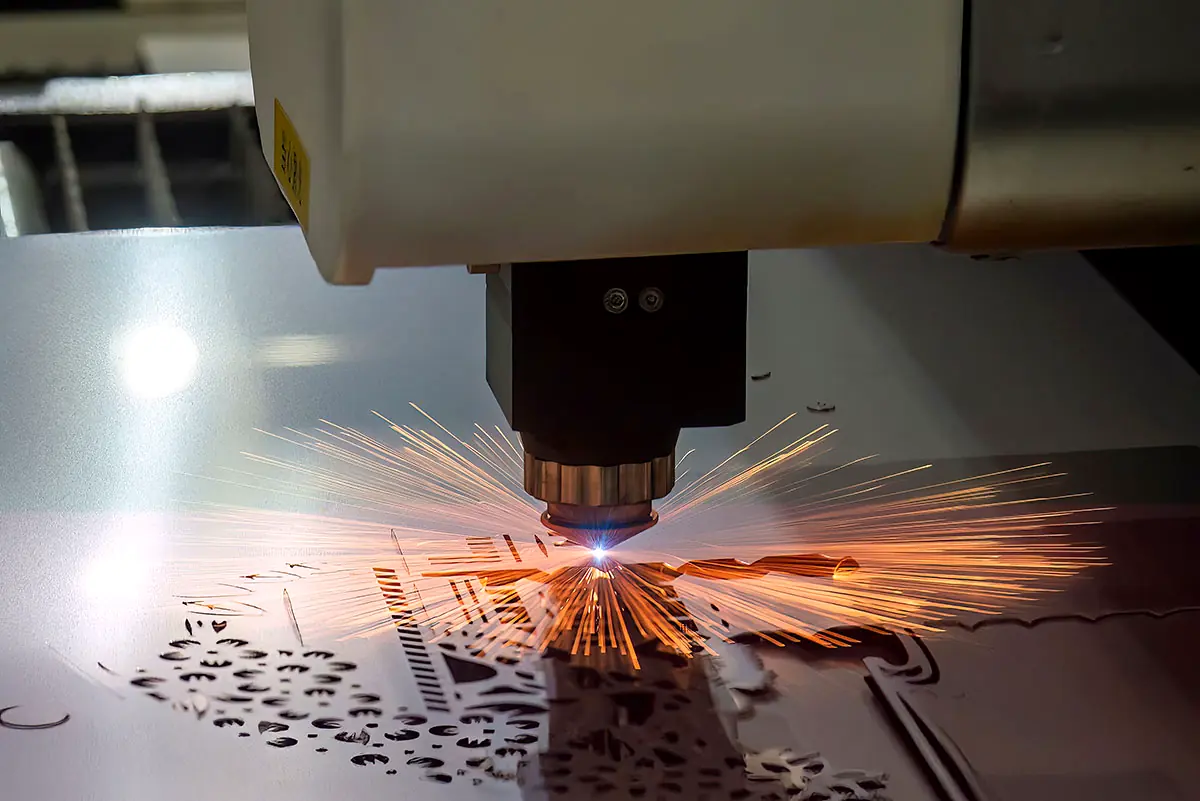
HomeInsightsSubcontract Laser Cutting in the UK: When Does Outsourcing Make Sense?
Subcontract Laser Cutting in the UK: When Does Outsourcing Make Sense?
Subcontract laser cutting means sending your drawings to a specialist that owns the lasers, holds the material and returns finished parts, so you pay per part instead of paying for machines, operators and floor space. For most UK manufacturers it makes sense when volumes change, when work needs capacity you do not have, or when a part needs a machine you would never justify buying.
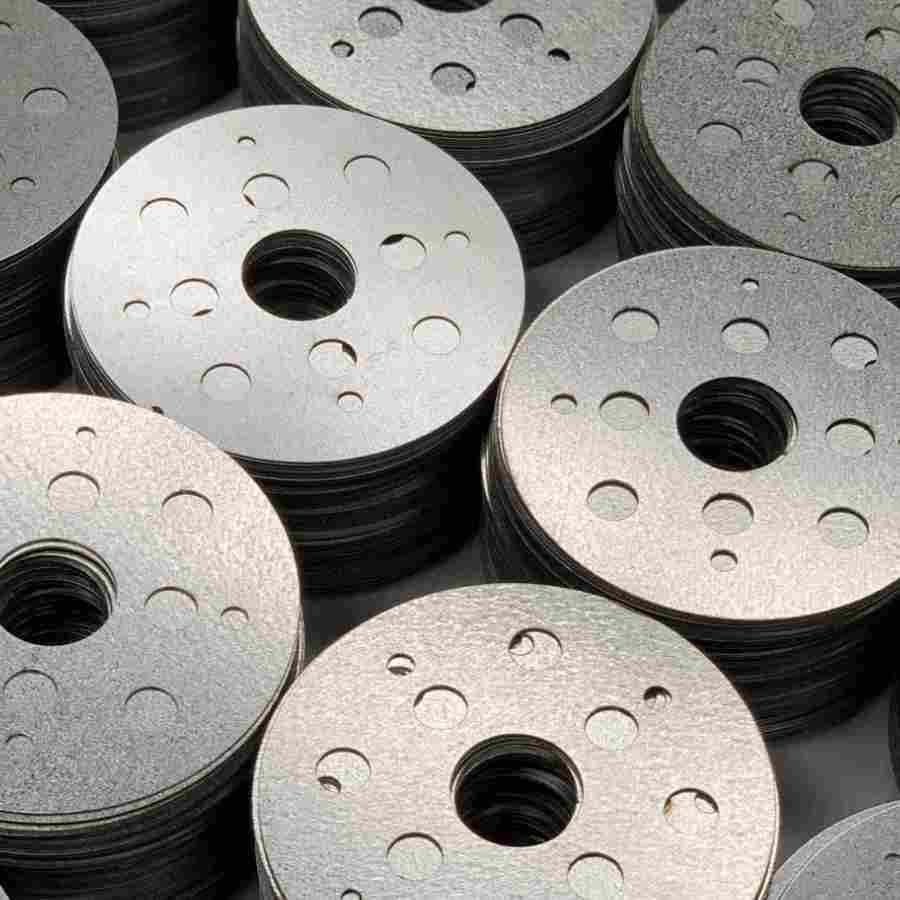
GF Laser has offered subcontract laser cutting from Dudley in the West Midlands since 2006. This guide draws on what we see every day from OEMs, fabricators and engineers who send work out.
What is subcontract laser cutting?
A subcontract laser cutter works to your drawing. You send a CAD file, and the cutter prices it, nests the parts on a sheet to keep material waste down, cuts them and ships them back. Many will also fold, drill, tap and arrange coating, so the parts arrive ready to assemble.
The difference from buying a laser is simple. You do not carry the cost of the machine, the servicing, the gas, the programming software or the people who run it. You pay for the parts you need, when you need them.
When should a UK manufacturer outsource laser cutting?
When demand goes up and down
In-house lasers earn their keep when they run all day. If your demand rises and falls, a subcontractor gives you overflow and surge capacity without leaving a machine idle in the quiet months.
When you are developing a new product
Prototypes and design changes are where laser cutting is at its best, because there is no tooling to pay for. If a hole moves, the CAD file changes and the next part is cut. Our laser prototyping service is built around exactly that.
When the part is already formed
A flatbed laser only cuts flat sheet. Trimming a pressing, piercing a spinning or adding holes to bent tube needs a 5-axis machine and a fixture to hold the part. Few manufacturers own one, which is why 5-axis laser cutting is one of the most common jobs sent out to subcontract.
When a line has stopped
A broken bracket can halt production. A subcontractor running shifts through the night can often cut a replacement faster than you could set up your own machine. That is the job our 24 hour laser cutting service is there for.
What should you send for a quote?
A DXF, DWG, STEP or IGS file gives the quickest and most accurate price. Tell the cutter the material, grade, thickness and quantity, plus any folding or finishing you need. If you only have a PDF, a sketch or an old part, a good subcontractor can still work from it. At GF Laser our CAD team will draw the part, and you sign it off before anything is cut.
What should you check before choosing a subcontractor?
- Accreditations. ISO 9001:2015 shows the quality system is audited. BS EN 1090 matters for structural steel work.
- Tolerances. Ask what is held as standard and what is possible on approval. We hold +/- 0.25mm as standard and +/- 0.1mm with prior technical approval.
- Material in stock. A cutter that stocks mild steel, stainless and aluminium can start without waiting on a steel delivery.
- Thickness and bed size. Check the maximum thickness for your material and the largest sheet the machine takes.
- What happens after cutting. If your parts need folding, buying cutting and sheet metal bending from one supplier saves transport, paperwork and time.
- Documentation. Automotive and aerospace customers often need PPAP, ISIR or CMM inspection reports. Ask whether these are produced in house.
How quickly can subcontract parts be turned round?
It depends on the process and the schedule. At GF Laser the standard lead time is three working days for flatbed work and five for 5-axis. There is a 24 hour route for most materials, and same day turnaround when the schedule allows. Quotes come back within 24 hours.
Choosing the right partner
Subcontract laser cutting works best when the supplier behaves like part of your production team. That means being honest about what can be cut, clear on lead times and consistent across every batch. If you are weighing up whether to outsource, the easiest test is to send a drawing and see what comes back.
Send your DXF or STEP file to GF Laser, or call our estimating team on 01384 245095, and we will return a price and a date within 24 hours.
Frequently asked questions
What files do you need for a laser cutting quote?
A DXF, DWG, STEP or IGS file is ideal. A PDF, a sketch or an existing part is fine too, and our CAD team can draw the part for your sign off.
What thicknesses can GF Laser cut?
We cut mild steel up to 20mm, stainless steel and aluminium up to 12mm, galvanised and Zintec up to 5mm, and brass, bronze and copper up to 3mm. Sheets can be up to 4000mm x 2000mm.
Do you only work with large manufacturers?
No. We supply OEMs and tier 1 and 2 suppliers, and we also cut one-off parts, prototypes and small batches for maintenance teams and smaller businesses.
Insights
- Tube Laser Cutting Services: Why Bent Tube Should Be Cut After Forming
- What Metals Can a Metal Laser Cutting Service Cut? A UK Buyer's Guide
- CNC Folding Services in the UK: How to Get Bent Sheet Metal Parts Right First Time
- How much is it to get something laser cut?
- Accurate laser cutting: what is actually possible?
- Should I choose laser cutting or CNC machining?
- What is the smallest hole you can laser cut?
- Laser cut garden screens
Not sure it is possible?
Send the file anyway. If we cannot cut it we will usually know why, and often know who can.
Send a drawing