HomeInsightsTube Laser Cutting Services: Why Bent Tube Should Be Cut After Forming
Tube Laser Cutting Services: Why Bent Tube Should Be Cut After Forming
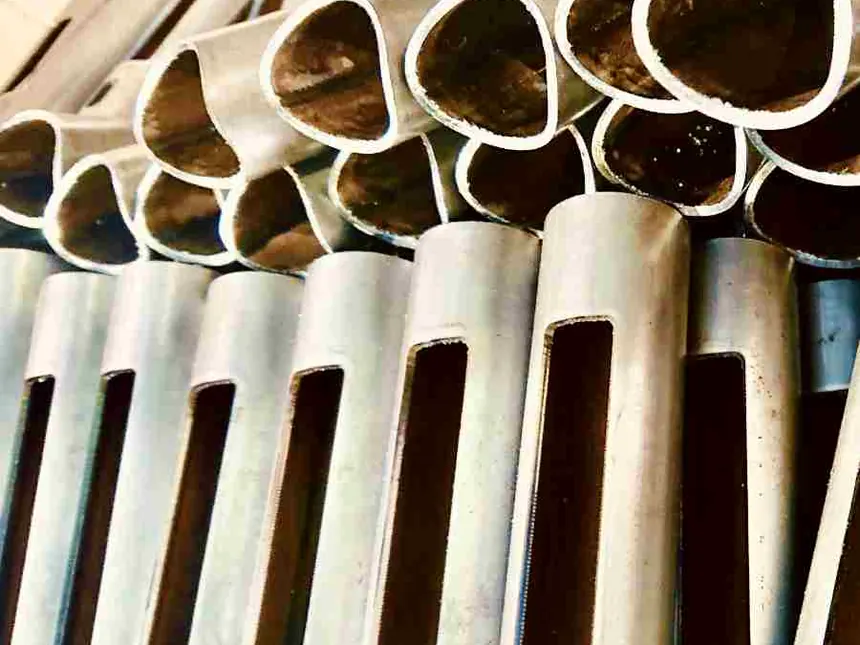
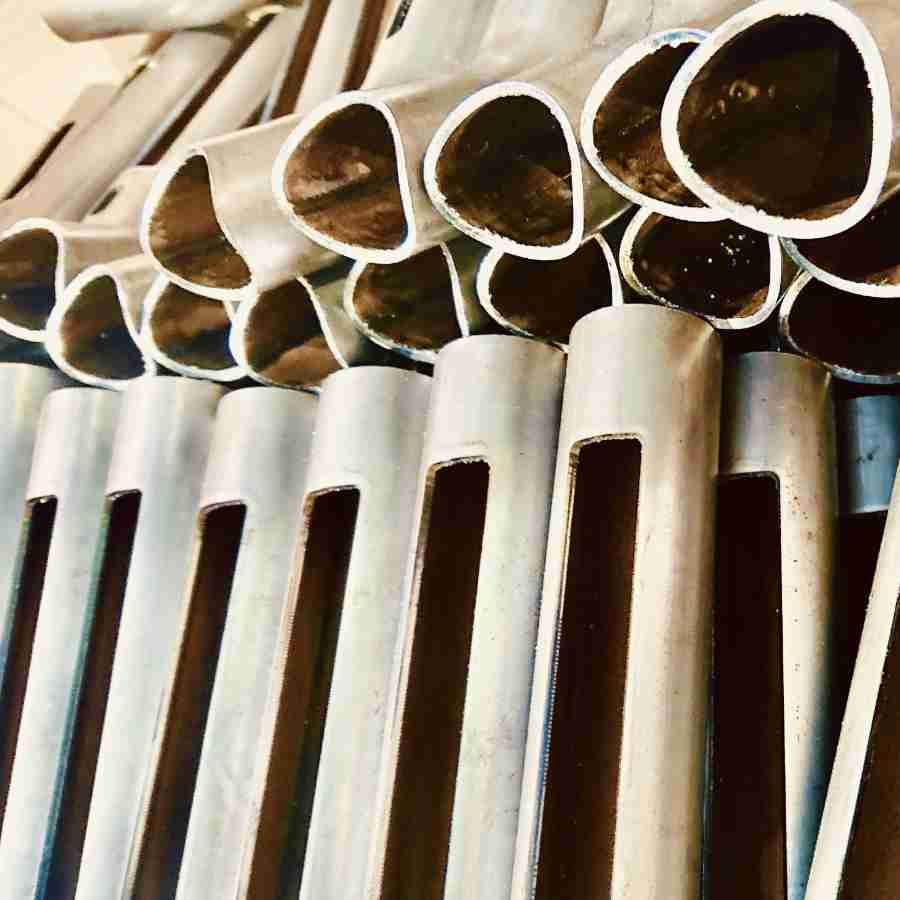
A tube laser cutting service cuts holes, slots, mitres and end profiles into metal tube using a laser rather than drills, saws or punches. If your tube has already been bent or formed, you need a 5-axis laser that can follow the shape in three dimensions, which is how we cut formed tube at GF Laser in Dudley.
Most tube work starts straight and ends up bent. Exhausts, seat frames, handrails, roll cages and chassis members all go through a bender before they are finished. The question buyers face is simple: do you cut the features before bending, or after? This guide explains the difference and what to send when you want a price.
What is tube laser cutting?
Tube laser cutting uses a focused laser beam to cut through the wall of a tube or section. It produces holes, slots, notches and shaped ends without hard tooling, so the machine can switch from one part to the next with a new program rather than a new tool.
There are two broad types of machine. A dedicated tube laser feeds straight lengths through a rotating chuck. A 5-axis laser moves the cutting head around a part held in a fixture, so it can cut tube that has already been bent, as well as angle, box section and extrusions.
Should you cut tube before or after bending?
Cutting before bending is fine for features well away from the bend. The trouble starts when holes or slots sit near a bend, or when two holes have to line up across the finished shape. Bending stretches the outside wall and squashes the inside, so a round hole cut beforehand can come out oval, and its position can drift.
Cutting after bending avoids that. The tube is already in its final shape, so every feature is cut exactly where it needs to be. That is why our formed tube laser cutting is carried out on our 5-axis machines, where there is no risk of hole distortion or warping from a later bend.
When cutting after forming makes sense
- Holes or slots close to a bend
- Features that must align across two legs of a bent part
- Mitred or profiled ends on a tube that has already been shaped
- Parts that have distorted in the past when cut first and bent later
How does 5-axis tube cutting work?
The tube is held in a fixture so it cannot move while the head cuts around it. We design and build these fixtures and jigs in house, using our own welding cell, so each part sits on defined location points. Off line programming and cutting simulation pick up potential problems before the part ever reaches the machine.
Our 5-axis laser cutting cell handles formed components up to 4000 x 1500mm. The largest machine has a split cabin, so one part can be loaded while another is being cut, which keeps batch work moving without downtime.
What materials and thicknesses can be cut?
We cut tube, angle, box section and extrusions in mild steel, stainless steel and aluminium, typically up to 10mm thick. If you need another metal or wall thickness, ask. We can often source specific materials and work out a solution for your project.
Which industries use formed tube laser cutting?
Automotive is the biggest user, and it is where most of our tube work has gone since we started cutting on 5-axis machines in 2006. The same approach suits any sector where a bent tube has to fit an assembly first time, including yellow goods, fabrication, construction and general engineering.
For automotive production, our in-house quality department can supply checking fixtures, ISIR and PPAP documentation, with CMM inspection reports where the customer asks for them.
How long does it take, and what should you send?
The standard lead time on our 5-axis machines is five working days, and we run three shifts across five days. For a quote, a STEP file of the formed tube is ideal, because it shows the shape after bending. If you only have a drawing or a physical sample, send that instead. Our CAD team can work from it, and 3D laser scanning can capture a part that has no drawing at all.
Quotes come back within 24 hours, with a price and a date.
Conclusion
If the features on your tube have to land in exactly the right place after bending, cut them after bending. A 5-axis laser does that without tooling, which keeps prototypes and repeat batches affordable and consistent. Send us your STEP file through the GF Laser website or call 01384 245095 and ask for the estimating team.
Frequently asked questions
Can you laser cut tube after it has been bent?
Yes. GF Laser cuts holes, slots and end profiles into bent and formed tube on Trumpf 5-axis machines. Each part is held in a fixture designed and built in house.
What sections can be cut on a 5-axis laser?
Round, square and formed tube, plus angle, box section and extrusions. We cut mild steel, stainless steel and aluminium, typically up to 10mm thick.
What file do I need for a tube cutting quote?
A STEP file of the finished, formed part is best. A PDF drawing, sketch or physical sample also works, and we come back with a price within 24 hours.
Insights
- What Metals Can a Metal Laser Cutting Service Cut? A UK Buyer's Guide
- Subcontract Laser Cutting in the UK: When Does Outsourcing Make Sense?
- CNC Folding Services in the UK: How to Get Bent Sheet Metal Parts Right First Time
- How much is it to get something laser cut?
- Accurate laser cutting: what is actually possible?
- Should I choose laser cutting or CNC machining?
- What is the smallest hole you can laser cut?
- Laser cut garden screens
Not sure it is possible?
Send the file anyway. If we cannot cut it we will usually know why, and often know who can.
Send a drawing